8 to 17% of post-secondary students are affected with an eating disorder.
Help your campus respond with confidence - learn how to bring our free programs to your school!
NEDIC is working to build capacity across post-secondary campuses to better support students affected by eating disorders and disordered eating.
Through listening to thousands of calls and chats from young people on our national helpline, we identified a gap in campus-based knowledge and support, alongside increased risk of eating disorders among post-secondary students. This led us to explore how we could more effectively engage campus stakeholders, increase awareness, and build confidence in supporting students who may be affected.
In 2019, we were accepted into the Knowledge Translation Program through the Mental Health Commission of Canada. Conversations with campus clinicians and students through this program helped inform our strategy and highlighted opportunities to address the gaps in knowledge and capacity related to eating disorder care on campus.
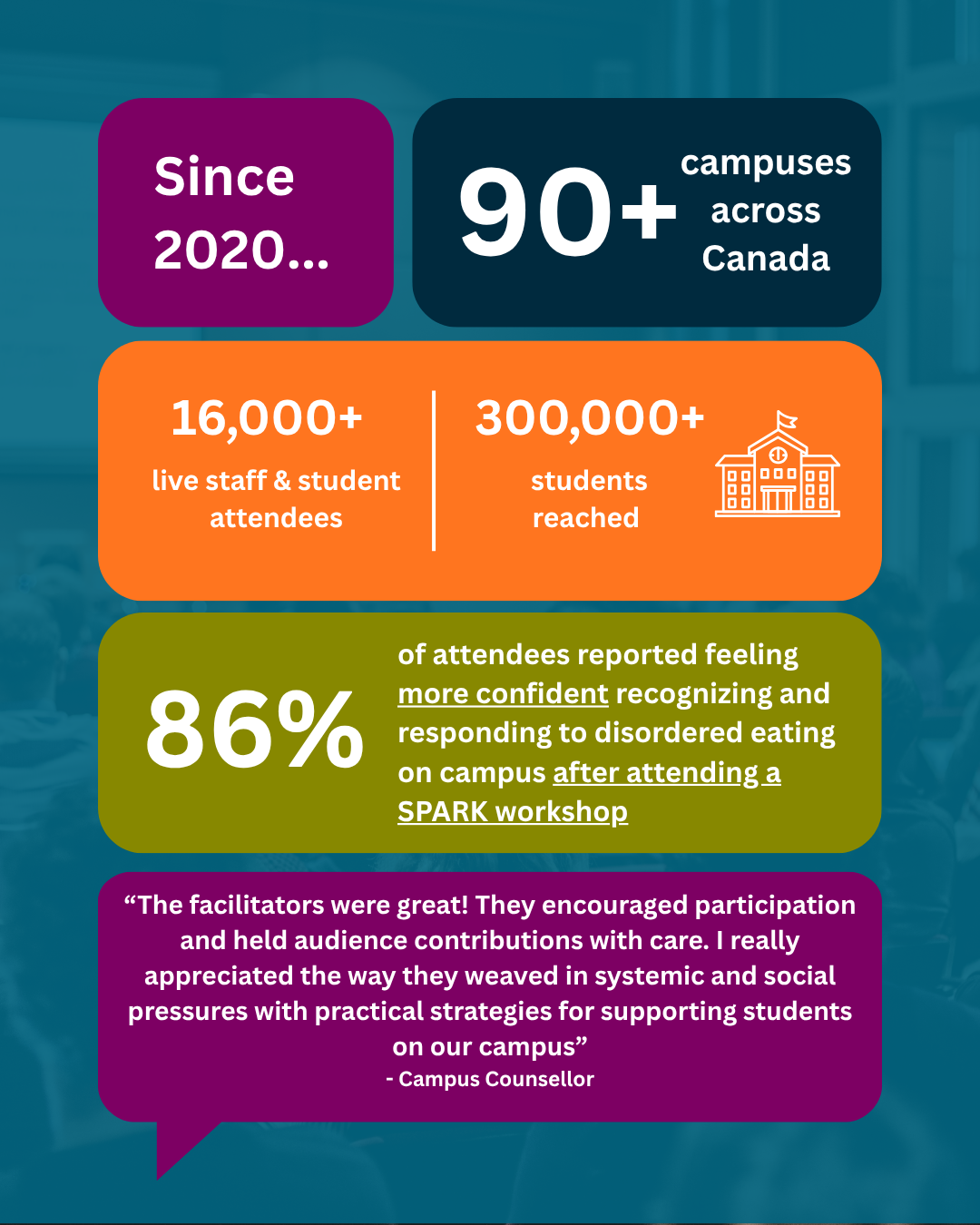
In 2020, we launched SPARK, an initiative that delivers live, customizable workshops for post-secondary campuses across the country. Since its launch, SPARK has reached over 300,000 students by facilitating education and training to campuses in every province and territory.
Help build your campus's capacity by booking a free workshop!
On this page, you will find information about:
Request an education session from our knowledgeable community education team. They can offer free, on-campus (in the Greater Toronto Area) or virtual (Canada-wide) sessions for post-secondary institutions on a variety of topics, including:
Spotting the signs and supporting someone affected (for student services professionals, student leaders, residence staff, peer supporters) – 90 minutes
Learning objectives:
NEW OFFERING in 2026: Recognize, respond, refer: Creating eating disorder-informed sport and fitness spaces (for athletics and recreation staff) - 90 minutes
Learning objectives:
Navigating pathways to care for eating disorders in Canada(for campus health and mental health professionals)
Everyone’s baseline knowledge of eating disorders is different. We believe strong foundational knowledge increases our capacity to confidently and effectively provide compassionate support to the clients we work with. In light of this, we offer two versions of Navigating Pathways to Care. Identifying which version may be the best fit for your team will depend on your team’s existing overall level of knowledge on eating disorders and your scheduling availability.
Option 1: Two-part workshop – 75 minutes per session
Learning objectives – Part 1:
Learning objectives – Part 2:
Option 2: Single-session workshop – 90 minutes
Learning Objectives:
If your team has limited knowledge of eating disorders and weight stigma, Option 1 may be more suitable compared to the single-session version. We generally recommend Option 2 if your team has attended Spotting the signs and supporting someone affected or if they have a strong baseline knowledge of eating disorders.
Our team is flexible and able to tailor content; we’d love to work with you and figure out how to best support your needs regarding hopeful learning outcomes and scheduling!
New for 2026
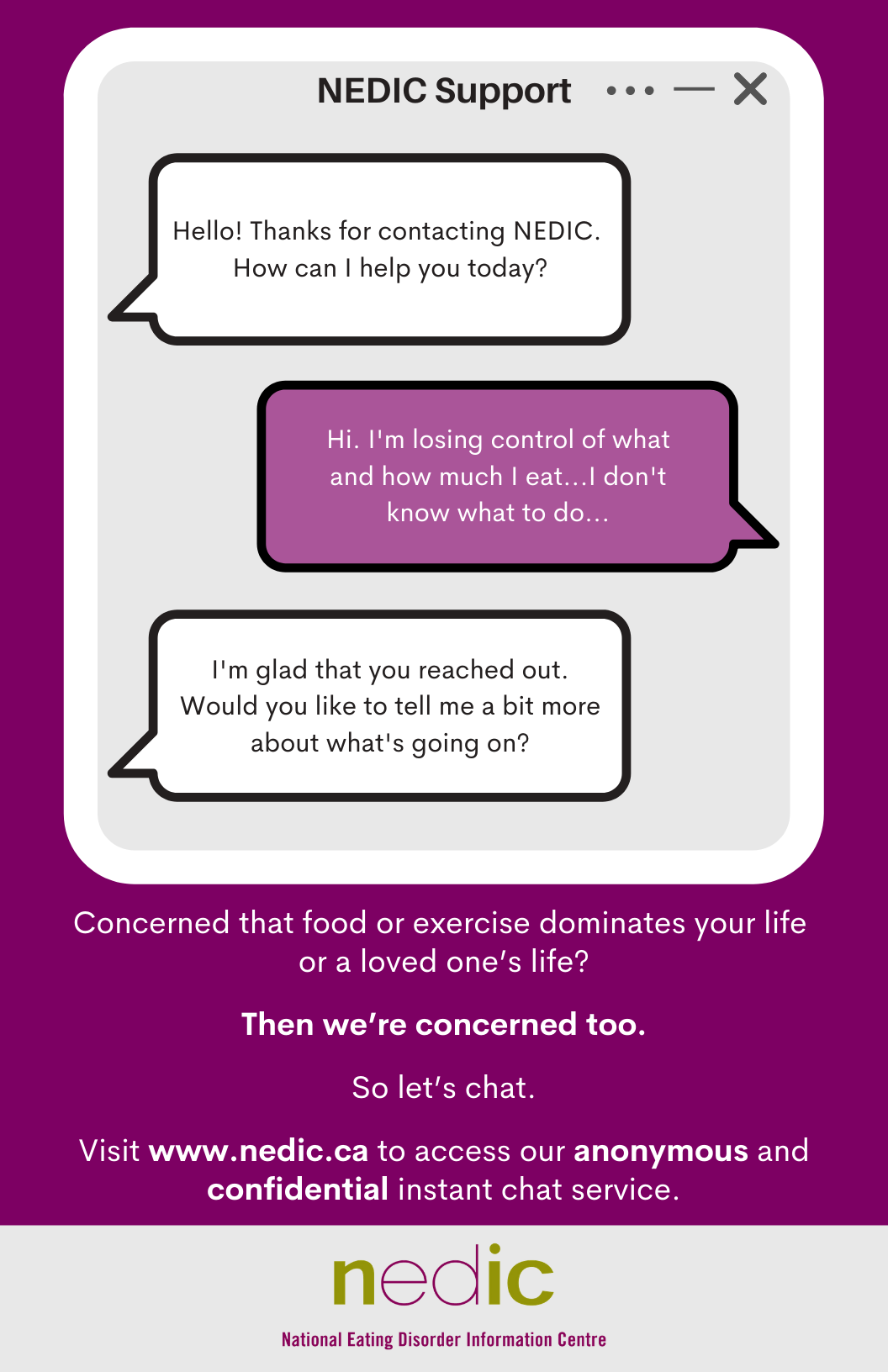
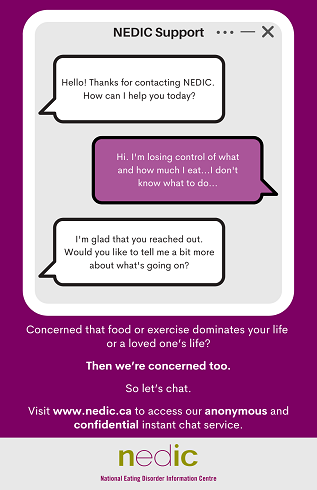
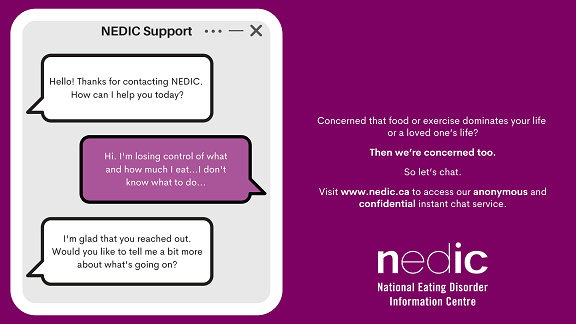
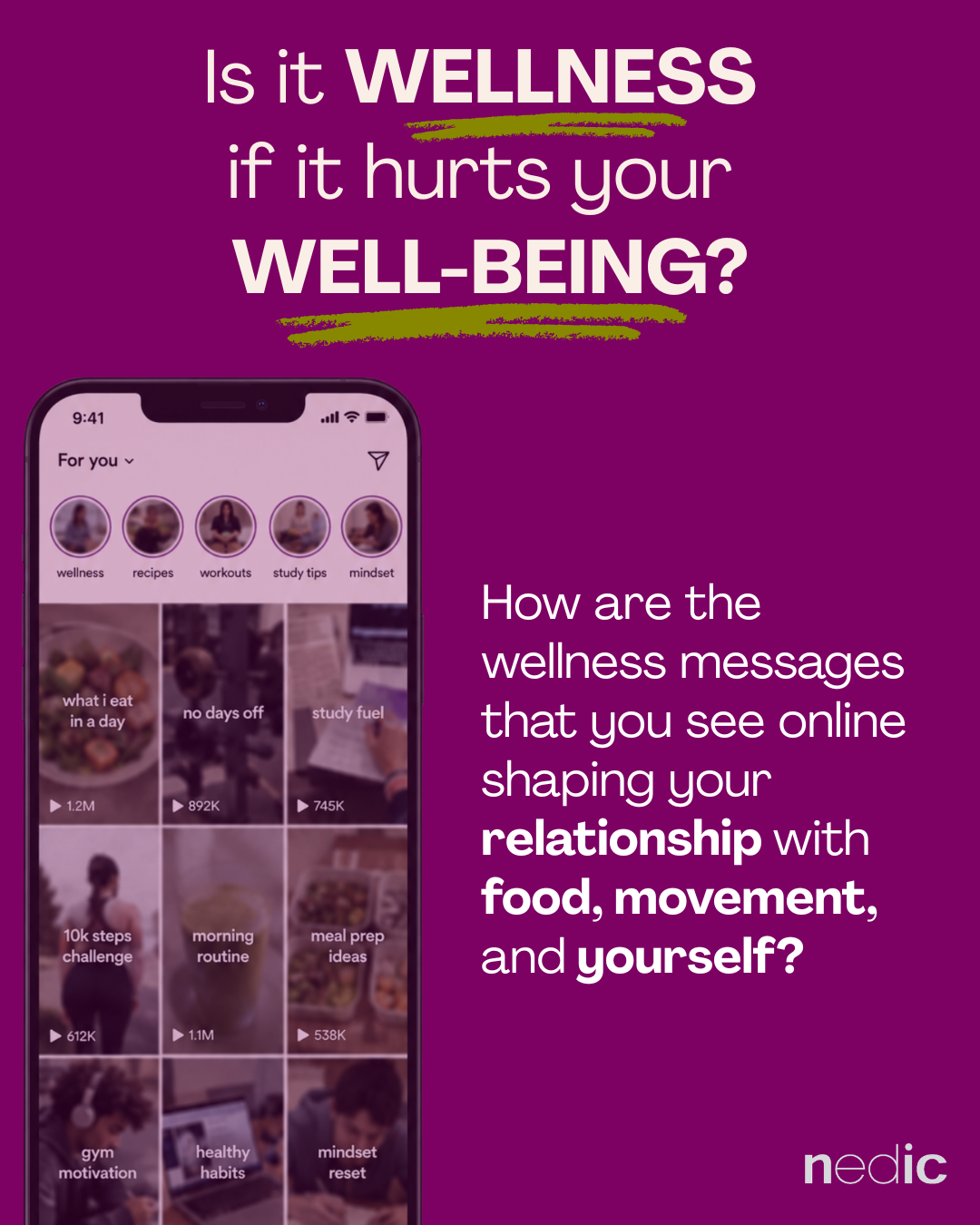
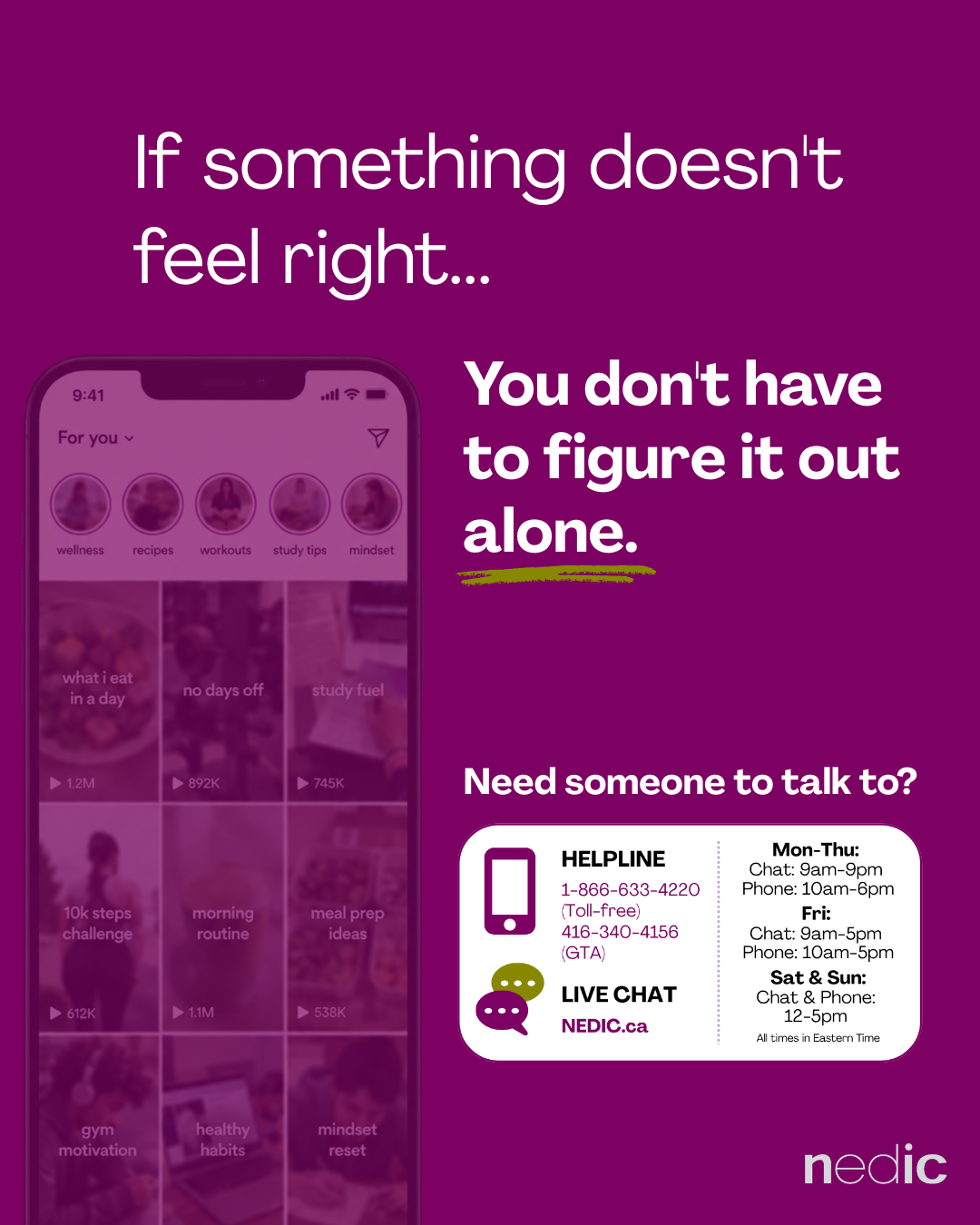
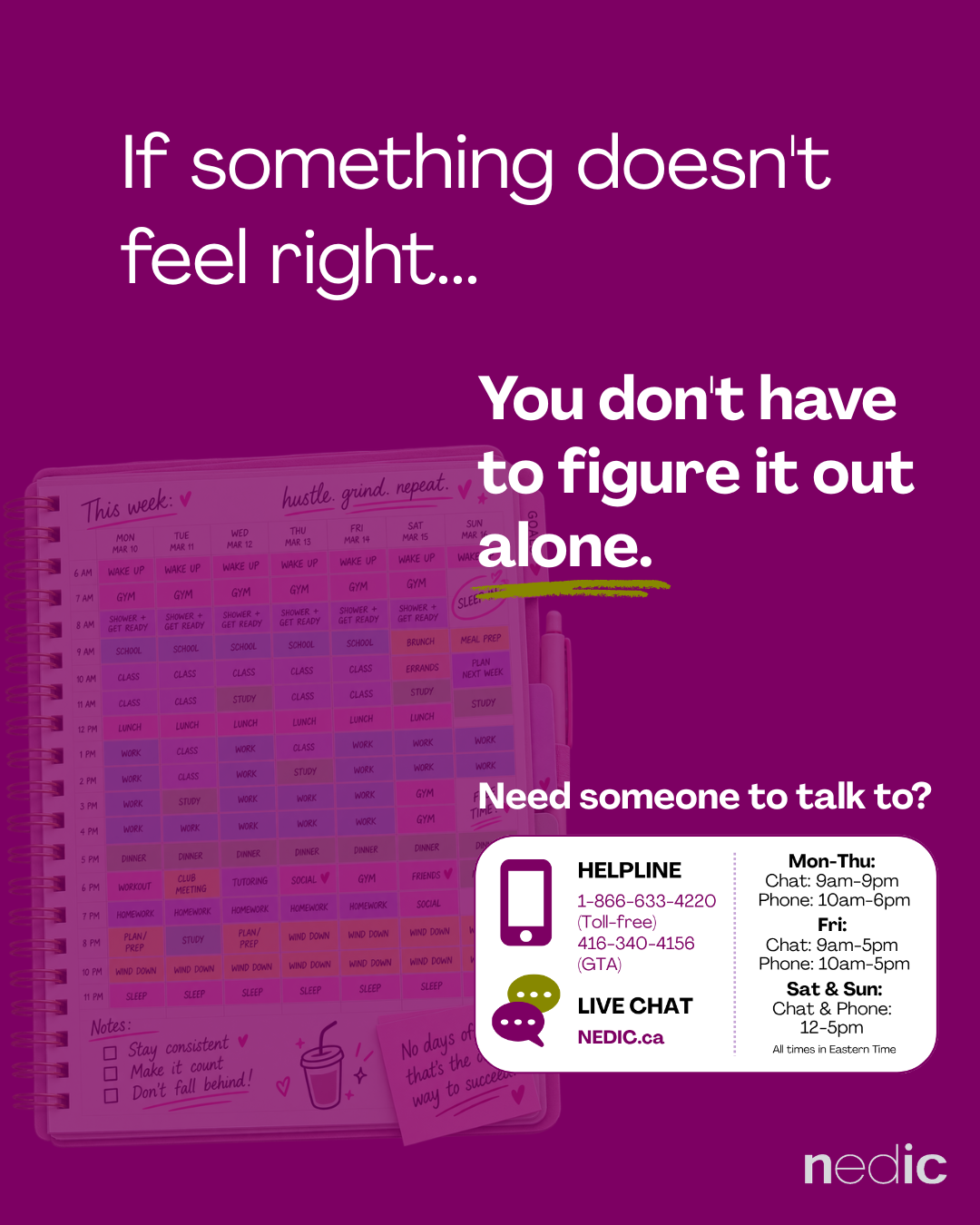
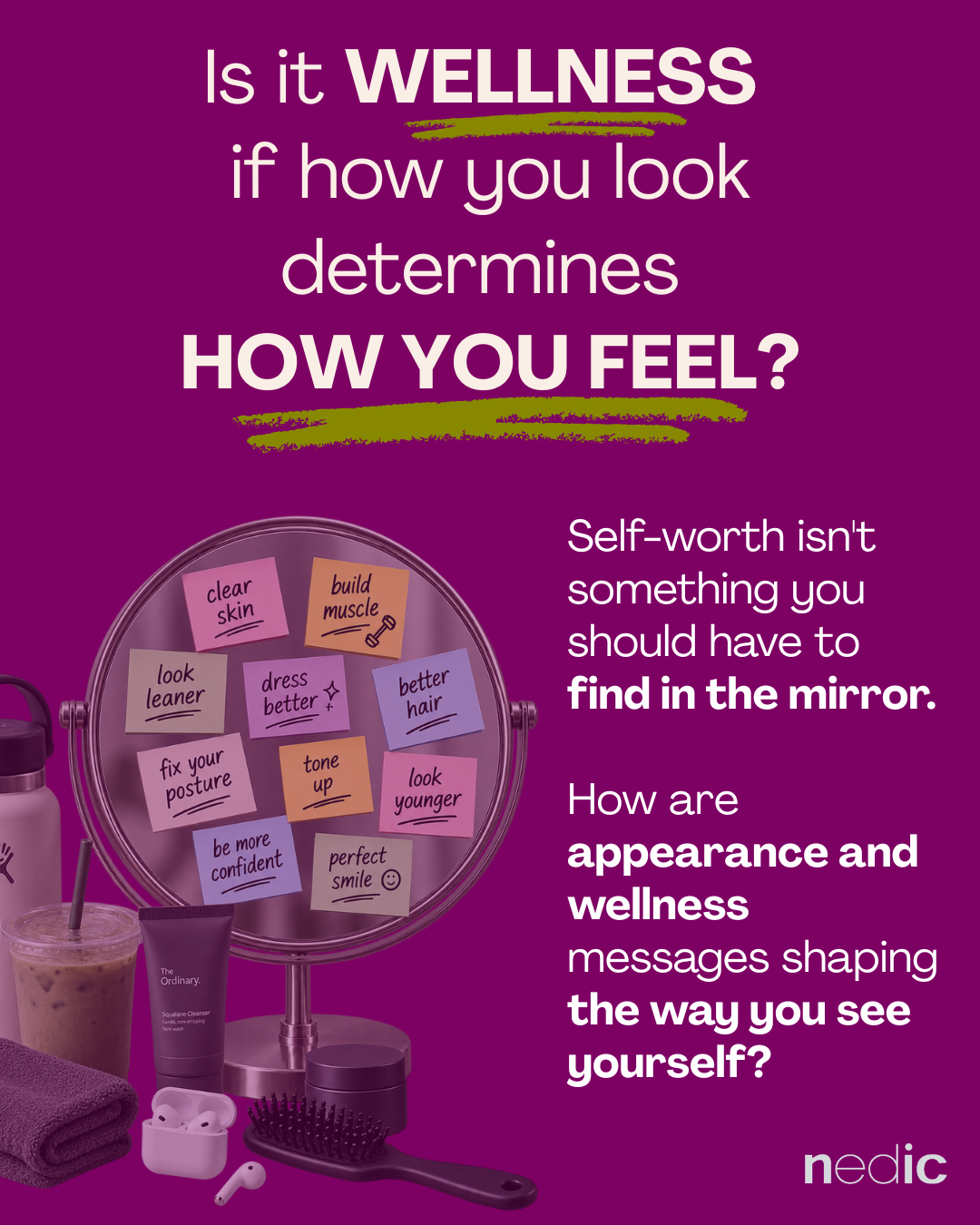
We have developed free, downloadable graphics sized for social media (but available to use anywhere you have digital space) that aims to promote help seeking among students who are living with body image and/or eating-related concerns.
We appreciate that each campus will have unique populations and needs. Please feel free to tailor the captions of each post to better connect with your campus community.
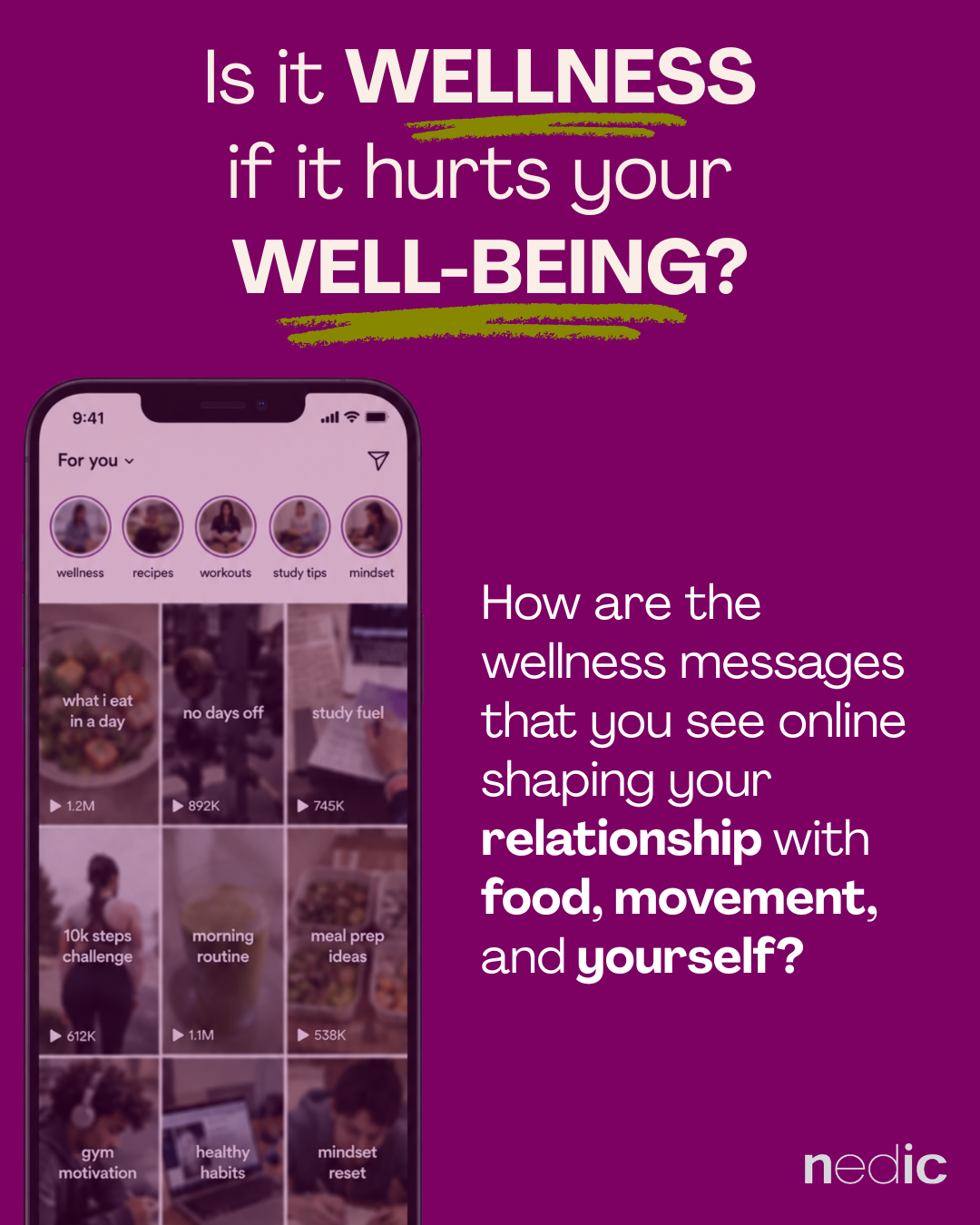
Suggested caption: How are the wellness messages you see online shaping the way you feel? If something doesn’t feel right, @the_nedic is there for you. Visit www.nedic.ca for information, resources, and anonymous, confidential support.

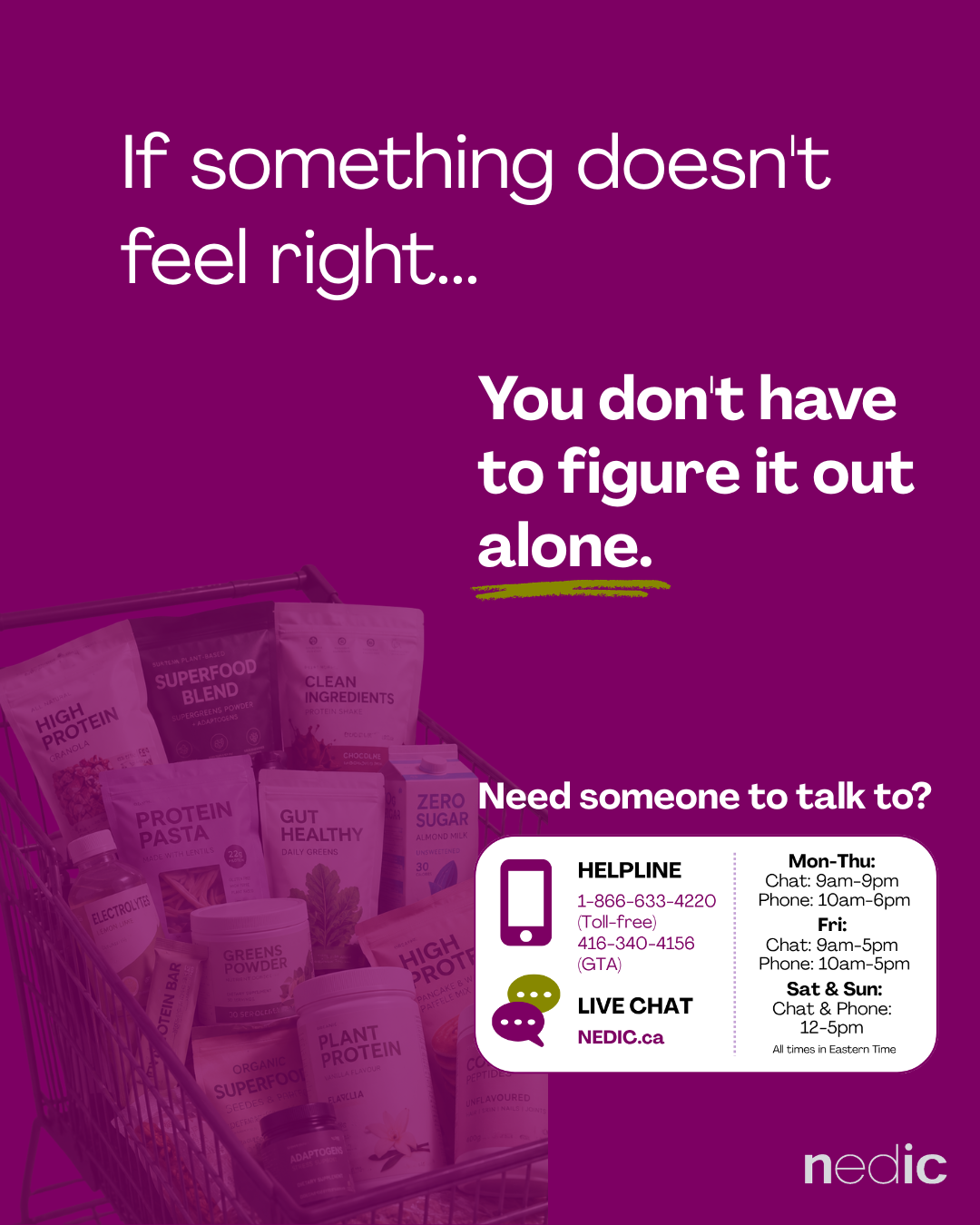
Suggested caption: What messages are shaping the way you think about food? If something doesn’t feel right, @the_nedic is there for you. Visit www.nedic.ca for information, resources, and anonymous, confidential support.
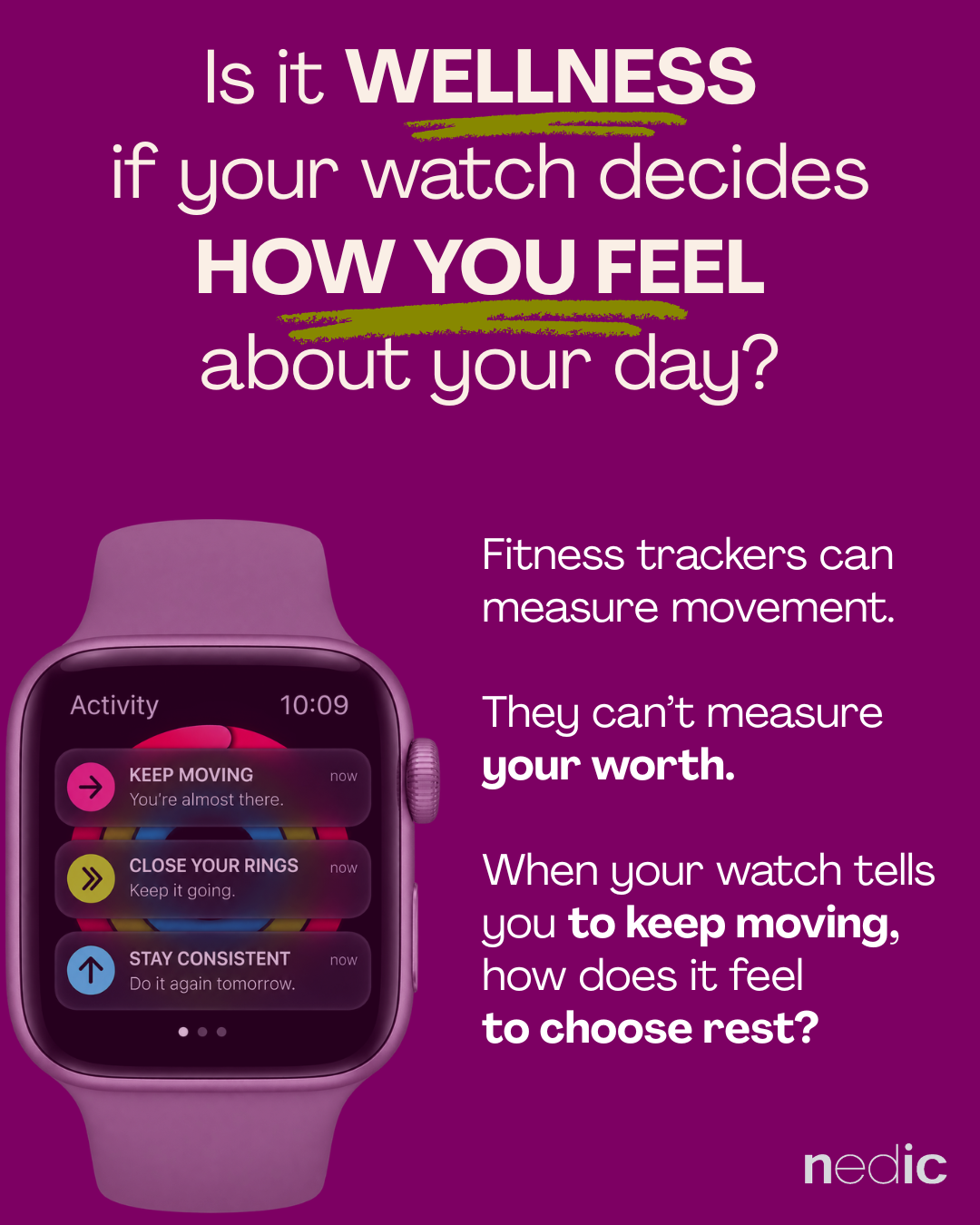
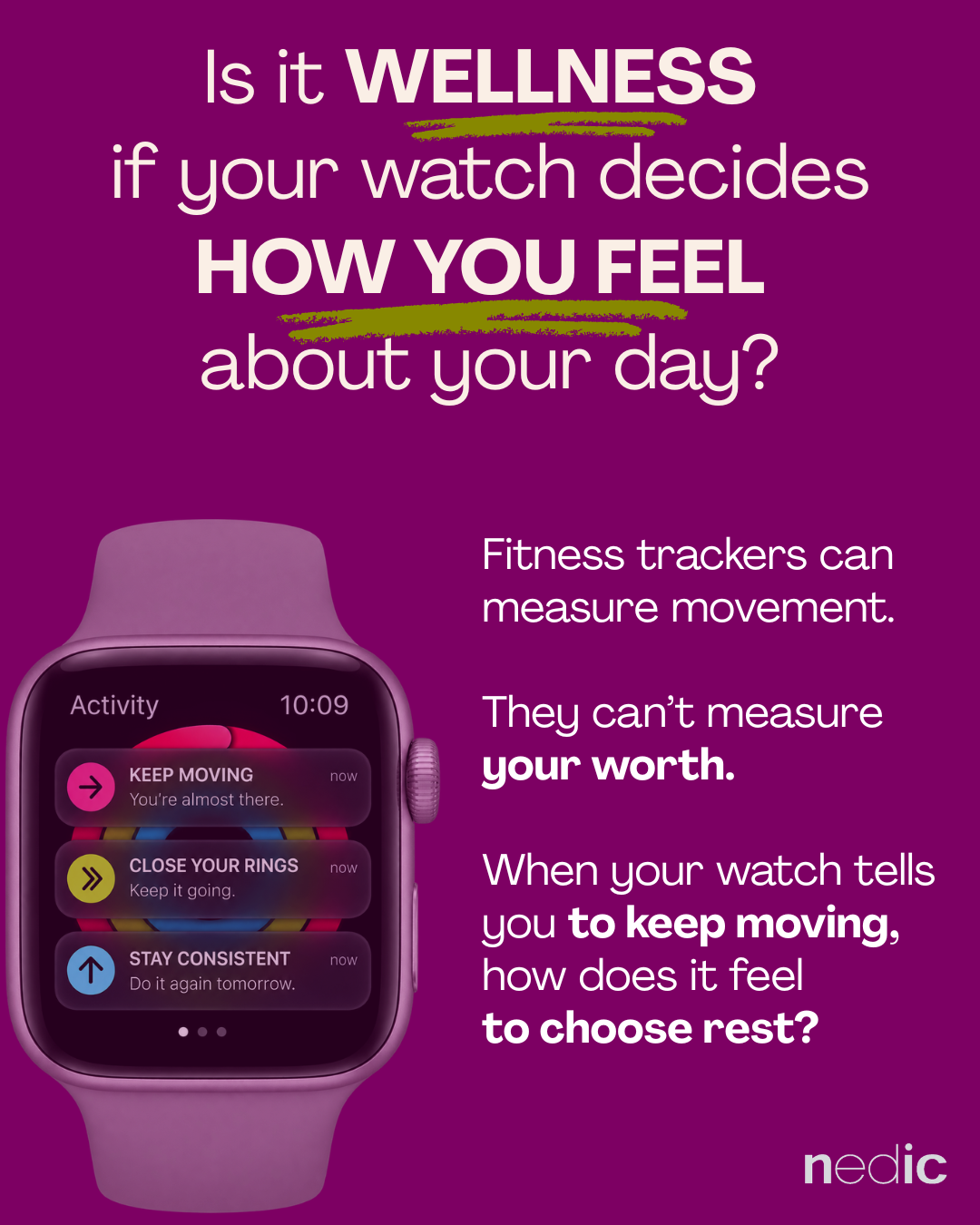
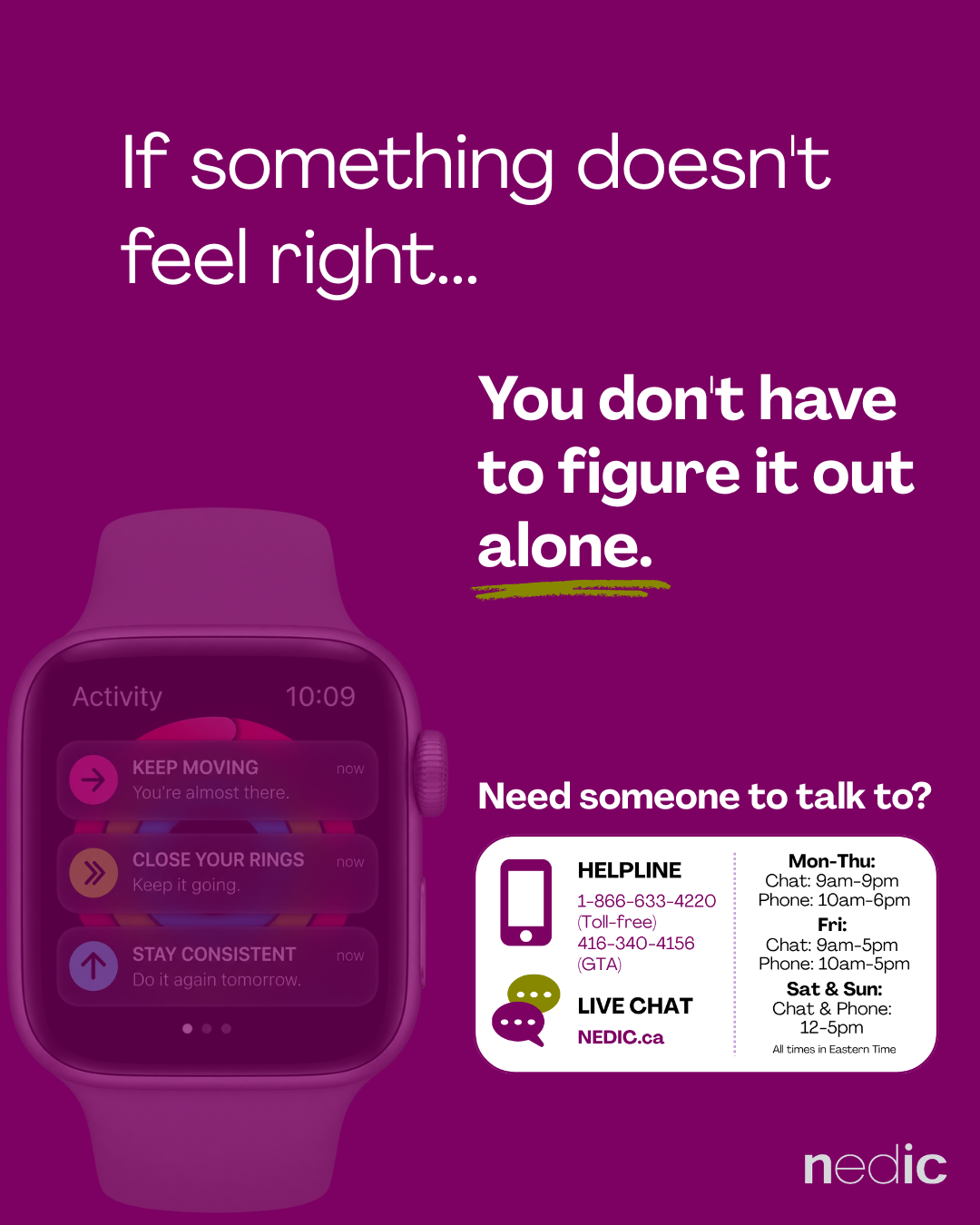
Suggested caption: How is tracking movement shaping your relationship with exercise? If something doesn’t feel right, @the_nedic is there for you. Visit www.nedic.ca for information, resources, and anonymous, confidential support.
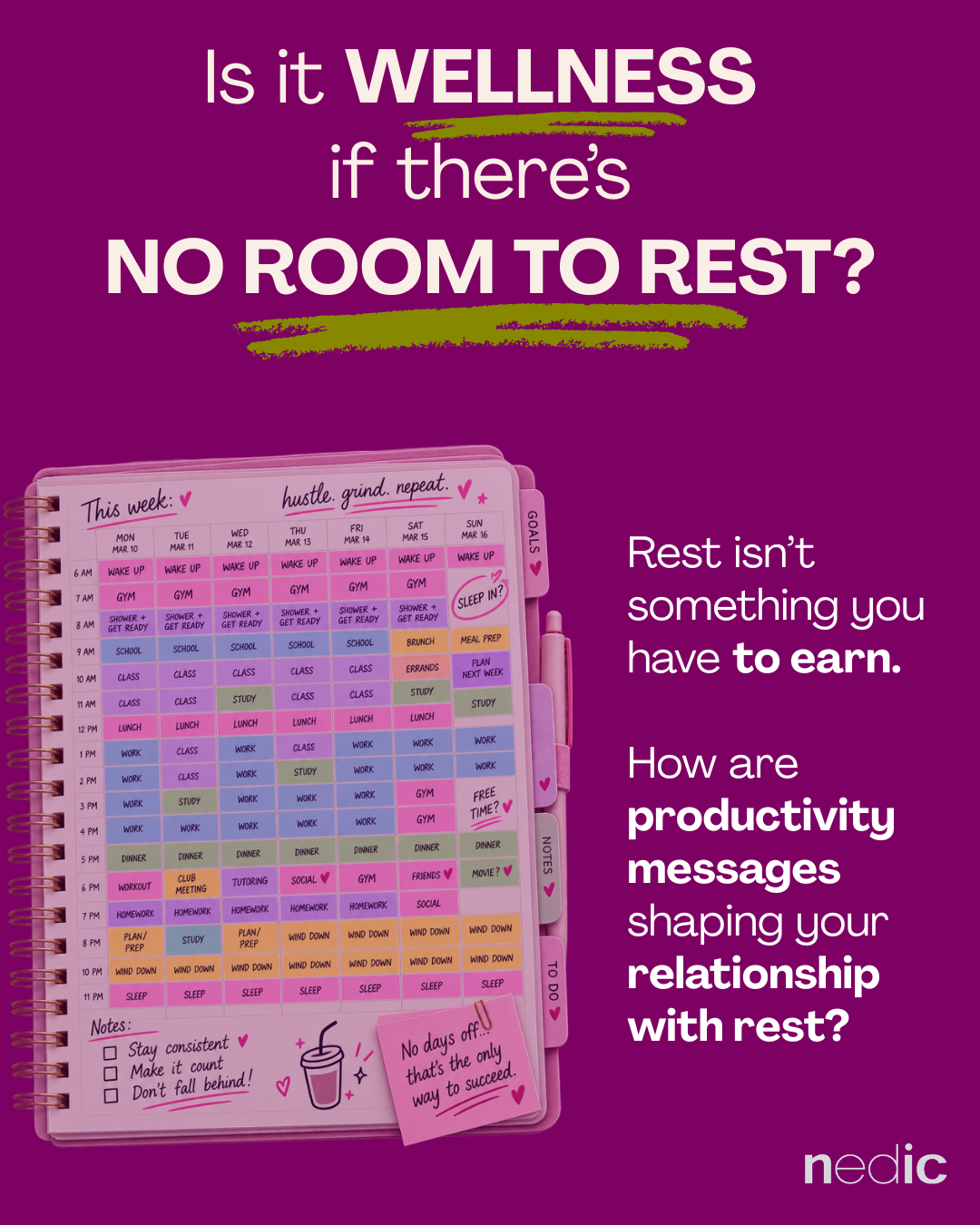
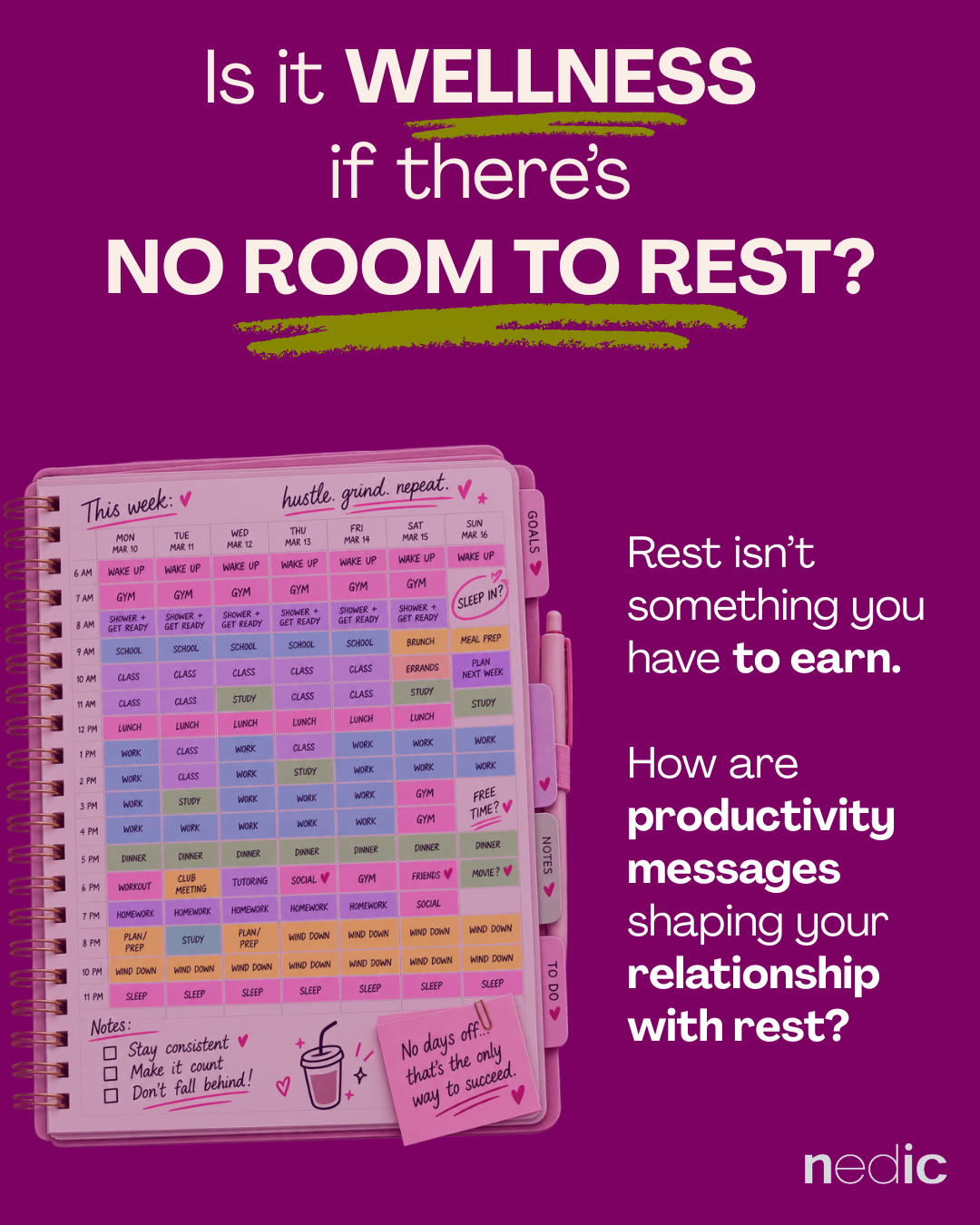
Suggested caption: When productivity is always encouraged, slowing down can feel difficult. How are productivity messages shaping your relationship with rest? If something doesn’t feel right, @the_nedic is there for you. Visit www.nedic.ca for information, resources, and anonymous, confidential support.
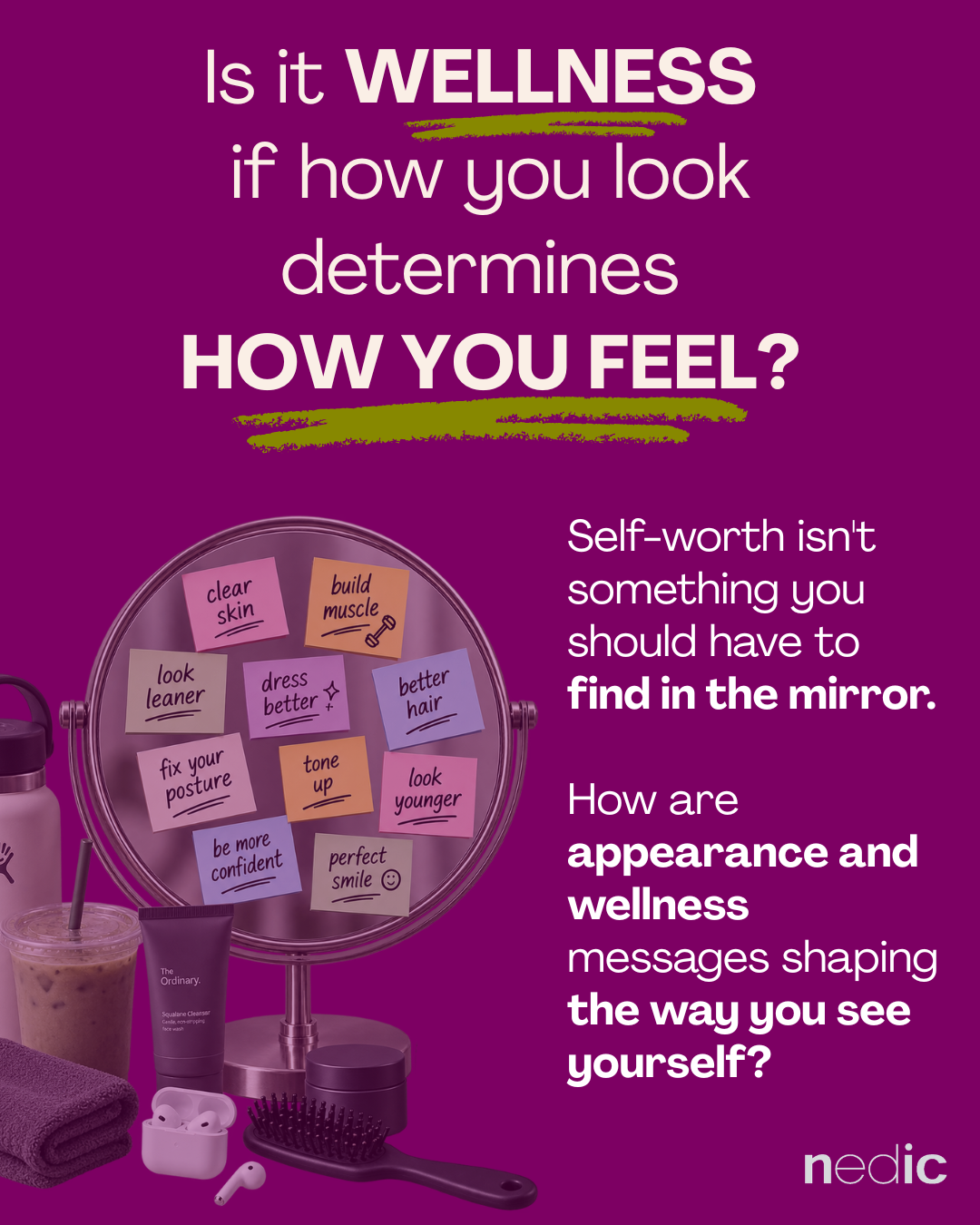
Suggested caption: Appearance and wellness messages can shape how we see ourselves and what we believe we need to change. How are these messages affecting the way you see yourself? If something doesn’t feel right, @the_nedic is there for you. Visit www.nedic.ca for information, resources, and anonymous, confidential support.

![slide 2]](https://nedic.ca/media/uploaded/Mirror_-_slide_2.png)