Emily Tam and Sara Marini, NEDIC
Nov. 18, 2025, 3:36 p.m.

Eating disorders are prevalent in Canada, and the onset often occurs in adolescence or young adulthood. In a large community-based study of Ontario adolescents, 2.2% boys and 4.5% of girls met DSM-5 criteria for an eating disorder; in addition, 1.1% of boys and 5.1% of girls were identified with a subthreshold eating disorder (Flament et al., 2015). It is therefore likely that you will encounter students who are experiencing eating disorders throughout your career. Some may already be connected with the appropriate resources and services, but school counsellors are uniquely positioned to identify and support students who need care. Early intervention is important as it is associated with better recovery outcomes. Individuals who are experiencing eating disorders may not perceive their situation to be problematic and may be resistant to receiving help, so it is essential to understand how to approach the situation tactfully and in accordance with your school’s policies.
As professionals with a significant amount of responsibility for supporting and promoting the development and well-being of large numbers of students, and who are often working with students with many different needs, it may be challenging to determine how you can best assist a student in their unique situation. Figuring out how to proceed when a student presents with a concern that involves both their physical and mental health, such as an eating disorder, may be daunting. This is especially true if you have not previously had occasion to receive training about or develop an understanding of eating disorders and disordered eating – many school counsellors have not before the first time one of their students presents with an eating disorder.
In the case of a student disclosing an eating disorder, you have an important opportunity to foster a positive and compassionate experience with an adult support provider for them. As you develop your understanding of eating disorders, you will feel more equipped to provide students with resources to better support themselves. The connection you can forge with a student at a critical point in their life may be fuel for their motivation (which may be in low supply) to make positive changes, such as being open with their parents or caregivers about their difficulties or engaging with an eating disorder service provider.
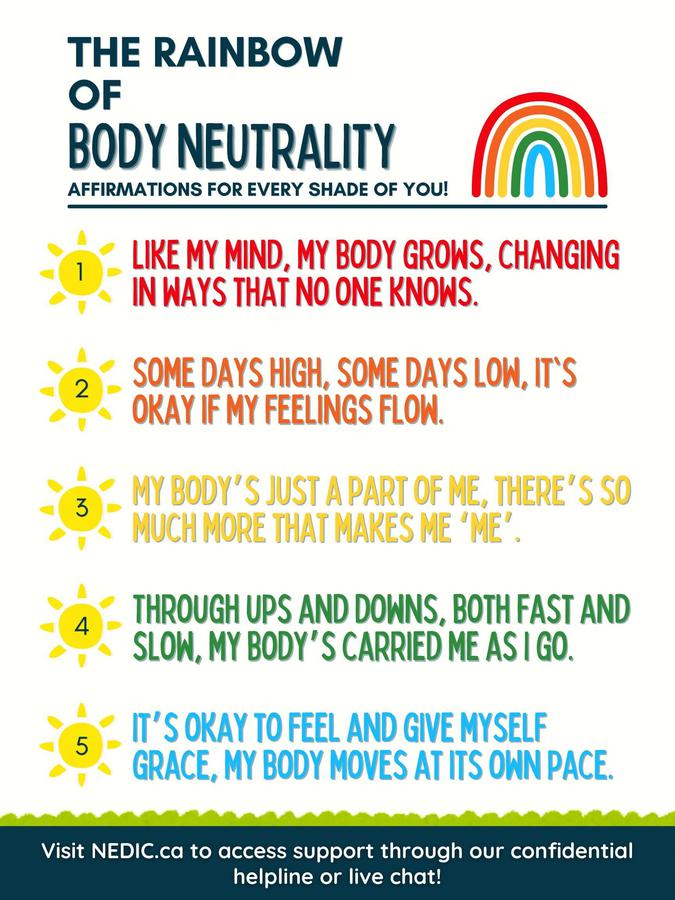
Ideally, eating disorders will be prevented so young people do not end up needing help to overcome struggles with eating-related distress. School counsellors play a valuable role in cultivating and maintaining a wellness-promoting school environment. An aspect of such an environment is body inclusivity, meaning that all types of bodies are respected and celebrated; any student, regardless of their weight, shape, size, race, gender, or other facet of their body, should feel welcome at school.
Examples of ways in which you can implement the pillars for a whole-school approach to preventing eating disorders include:
There are a number of factors to consider when responding to students who are presenting with disordered eating. Your school may already have a process or policy in place to shape your response; if a comprehensive school mental wellness program with guidelines for this situation does not exist, you may wish to consider implementing one, or updating an existing one. Your response should be compassionate and non-judgmental. If a student has approached you to disclose that they are experiencing eating difficulties, acknowledge their bravery. If a member of the school community has approached you out of concern for a student, acknowledge the concern and care that they are demonstrating while maintaining the privacy of the affected youth. In cases in which a student is seeking help out of worry for a peer, it is important to consider their own potential need for emotional support.
There are important changes which can be implemented at the school level to protect the well-being of the youth in your school, lessening the probability that they will develop an eating disorder. However, the prevalence of eating disorders within Canada means that it is highly likely that you will encounter affected students throughout your career. Seeking out training or professional development will help you confidently respond to and support those students. Available treatment options differ quite significantly across the country, and even within Ontario, so it is important to be aware of local organizations which can offer eating disorder services to youth. By developing your skill and growing your confidence in supporting youth experiencing disordered eating, you will have the opportunity to connect with these students at a critical point in their lives.
Flament, M. F., Henderson, K., Buchholz, A., Obeid, N., Nguyen, H. N. T., Birmingham, M., & Goldfield, G. (2015). Weight status and DSM-5 diagnoses of eating disorders in adolescents from the community. Journal of the American Academy of Child & Adolescent Psychiatry, 54(5), 403–413. https://doi.org/10.1016/j.jaac.2015.01.020
Photo by Polina Tenkilevetch via Pexels. This article originally appeared in the Fall 2024 issue of OSCA Today and is republished here with permission.